Addressing issues with adoption
for Lori Systems
Effectively aligning with the Nigerian logistics system.


Overview
Intro
Context
Problem Statement
Research
Design
Collaboration
Impact
Context
Lori’s mission is to drive down the costs of goods across Africa by improving efficiency of haulage and logistics.
Loss in efficiency leads to waste
In Africa close to 75% of food cost is attributed to price of moving from farm or manufacturing to point of sale locations.
What is Faru?
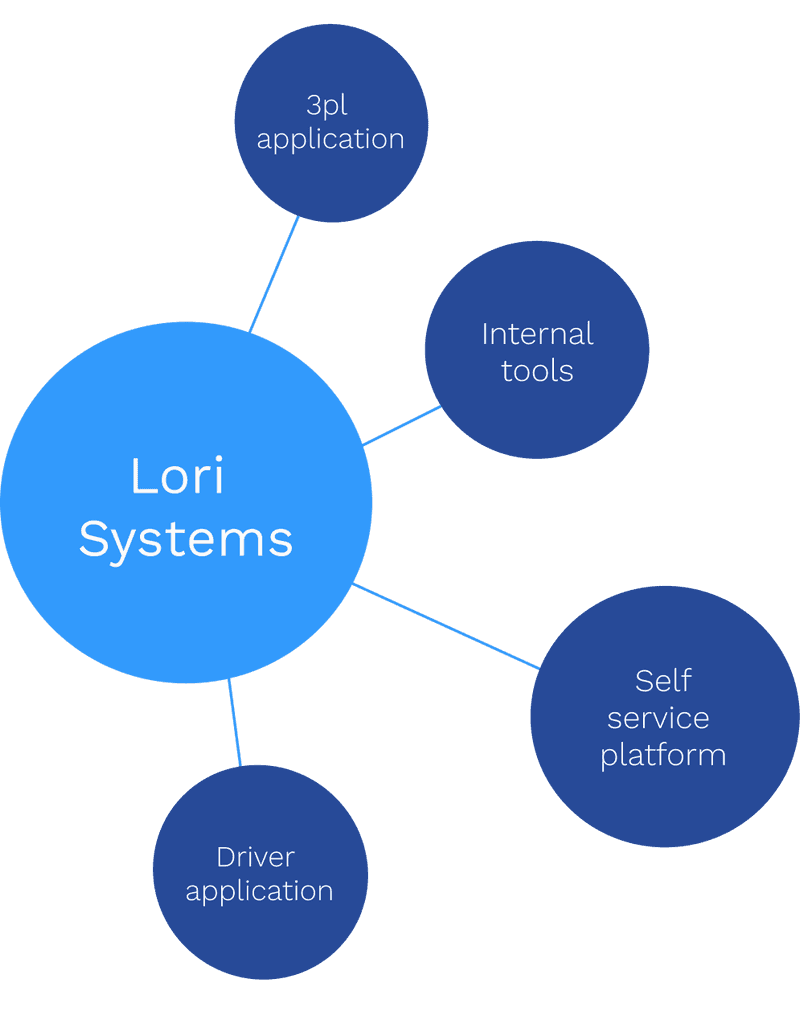
Lori’s boasted a 4-step tier Saas service infrastructure with dedicated resources for each customer base including Faru
Lead UX designer
UX Research
Road-mapping
Visual design
Prototyping
Self-service
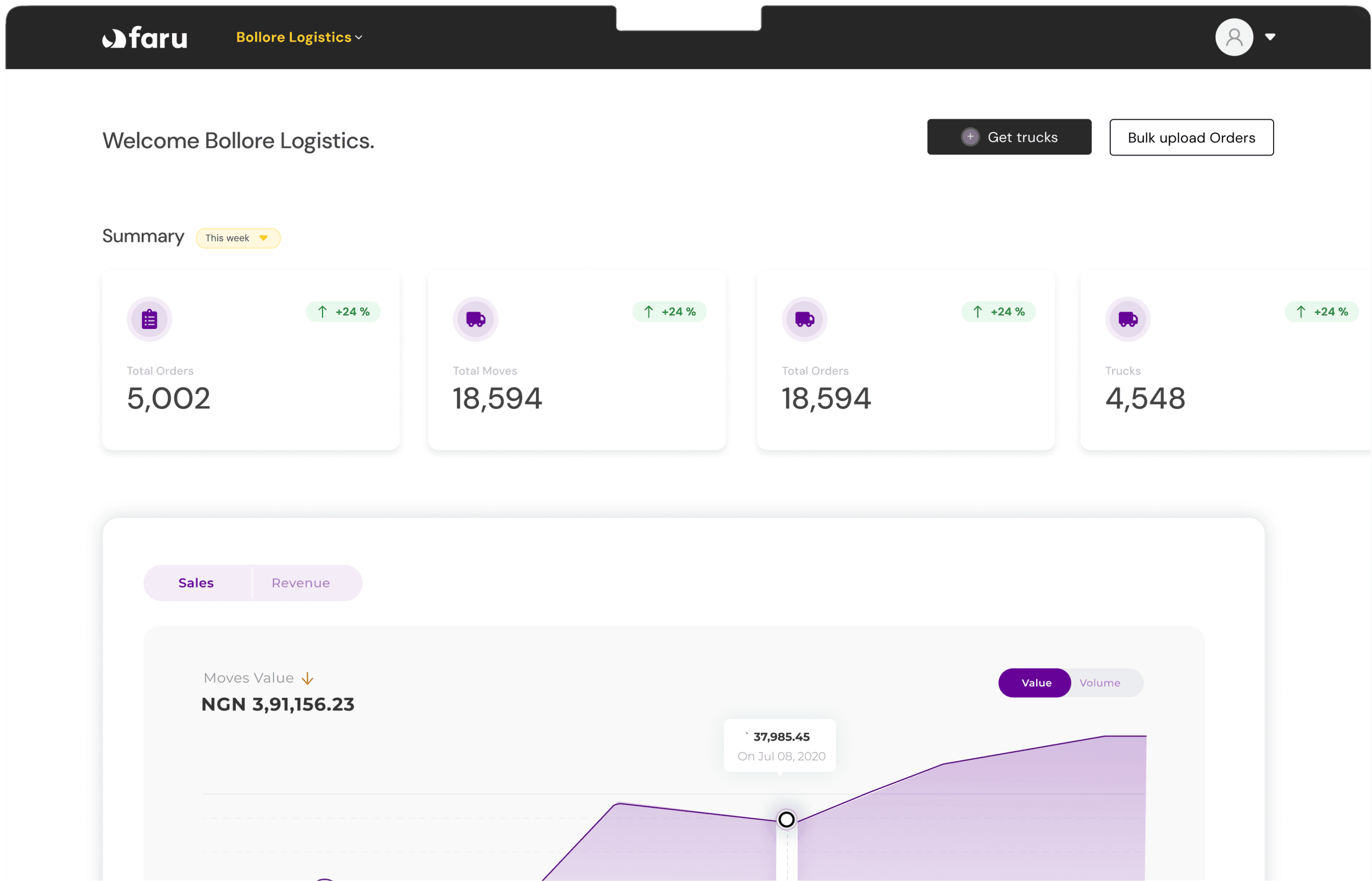
Faru attempted to deliver an autonomous, highly streamlined tool into the hands of FMCG and CPG manufacturing teams.
Send transport requests to trusted providers asset owners
Coordinate with drivers and effectively plan their cargo pickups
Consolidation and management of documents post-delivery
The Challenge
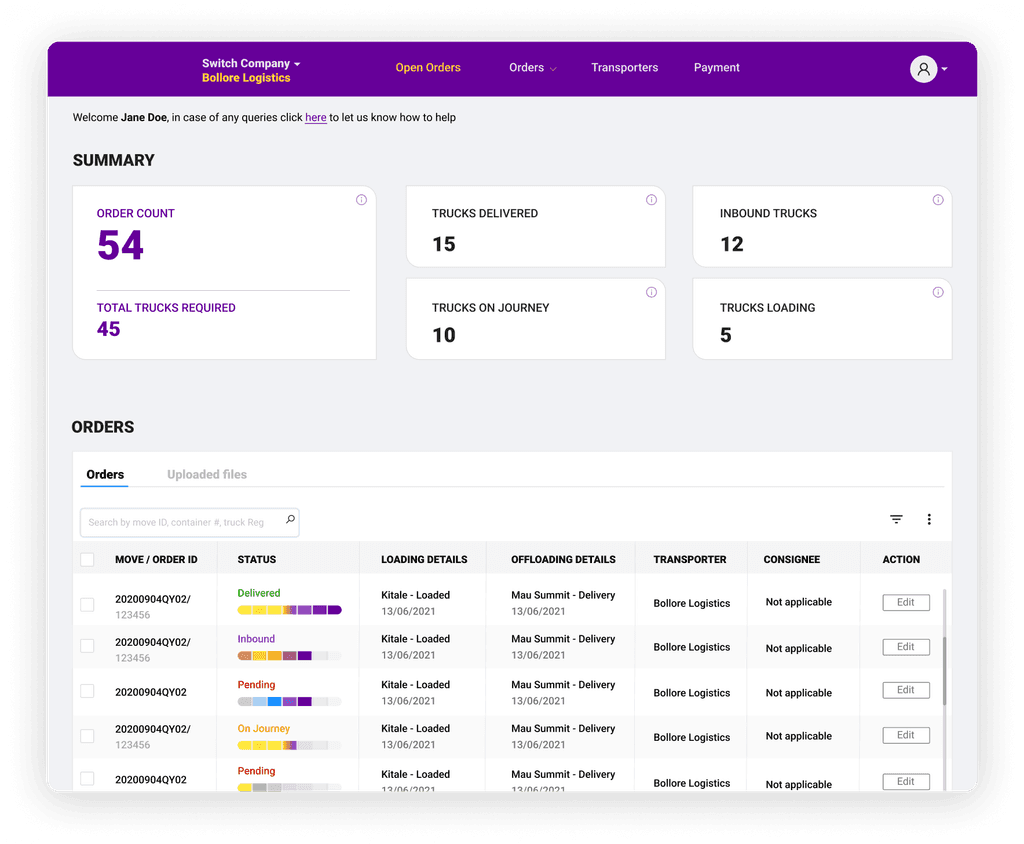
Despite enjoying success in other African regions Faru's MVP was struggling to be adopted within the Nigerian market.
Process flow optimisation
Contextual insight into mental models
Aligned feature implementation
Creating a tailored context library
To create a better for our team i needed to understand things from the clients perspective
Understanding the client process
Insight into client persona
Pain points
Oppurtunities
Understanding the client process
Insight into client persona
Pain points
Oppurtunities
o
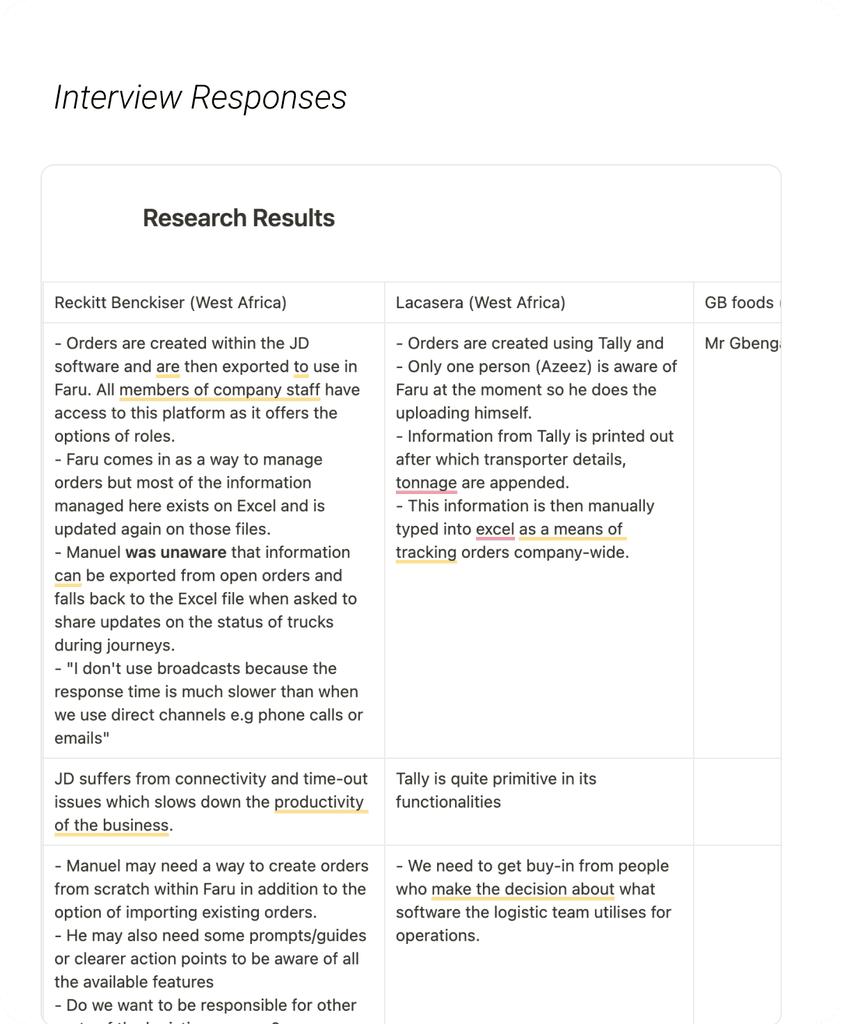
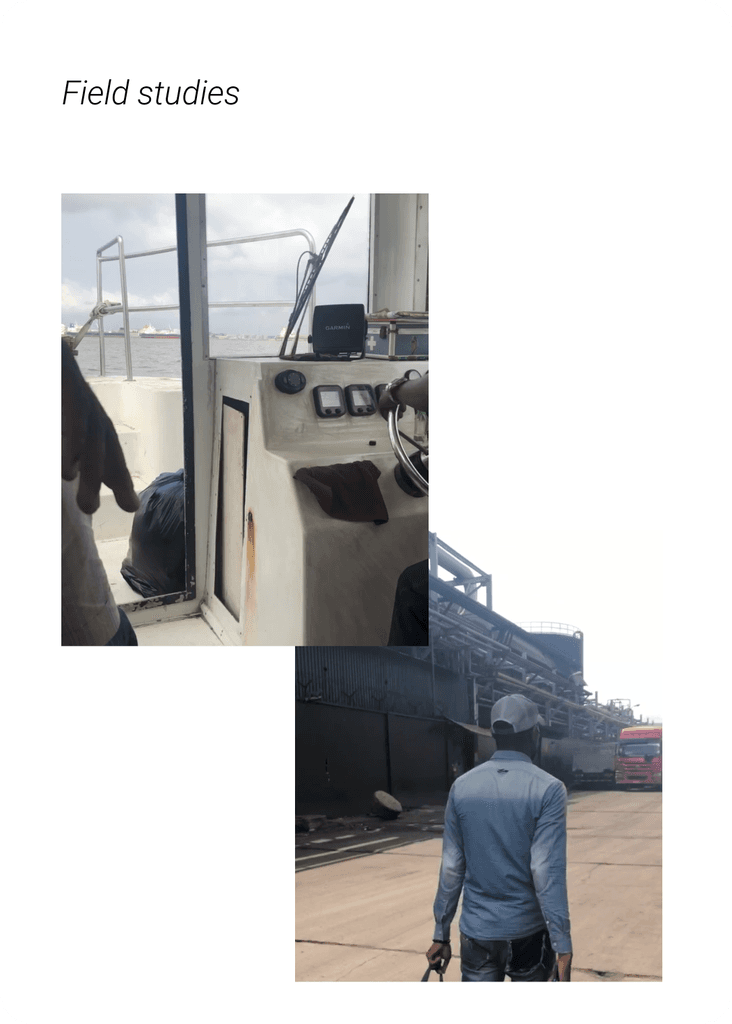
Artifacts
Collaborating with our head of product and sales. I conducted user interviews and 2 field studies.
Kickoff
We recruited 5 representatives from customer companies on the criteria of existing high usage and low usage customers
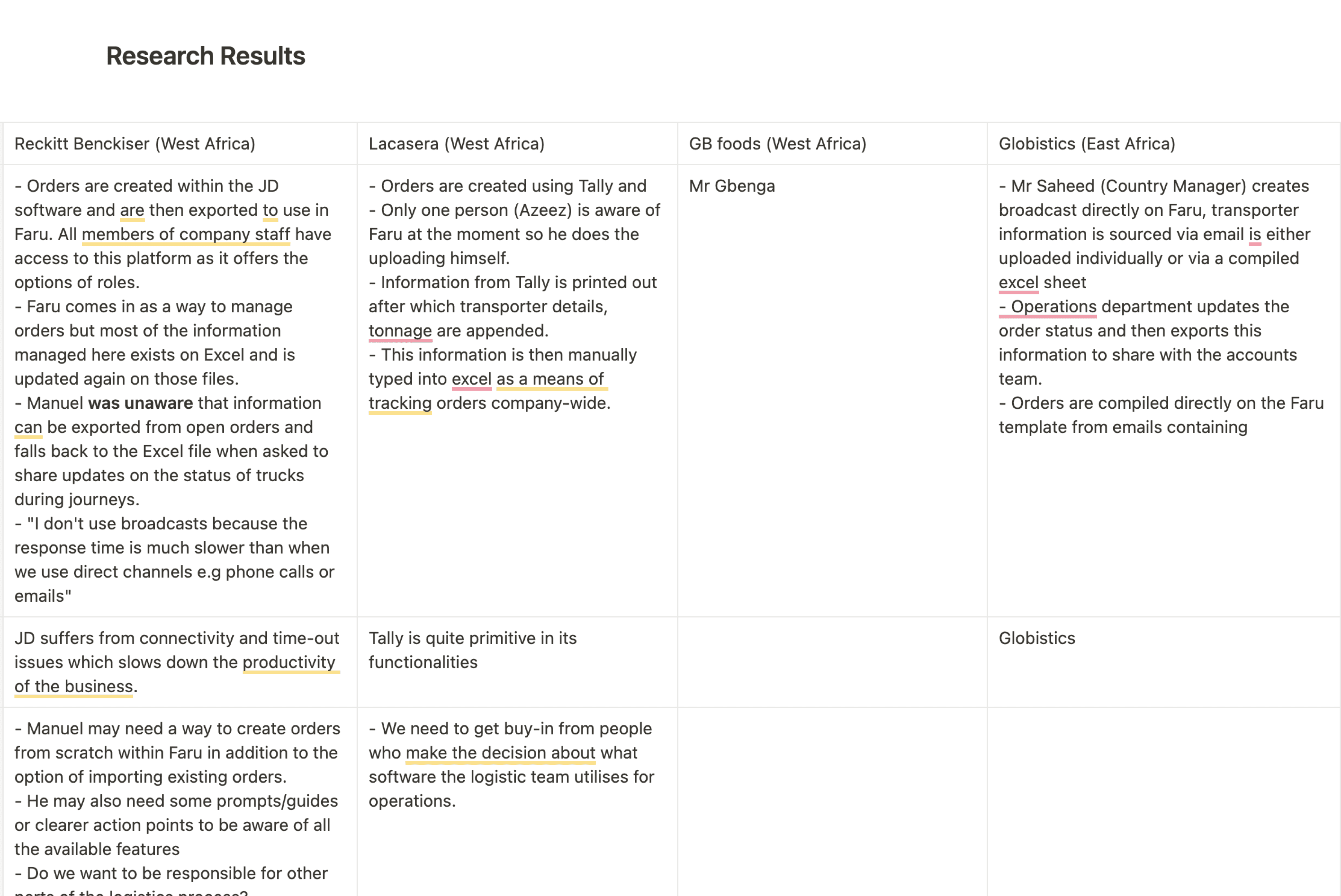
Major Insights
Jobs to be done diagram showed that 70% of our client process was naturally occurring outside of our application.
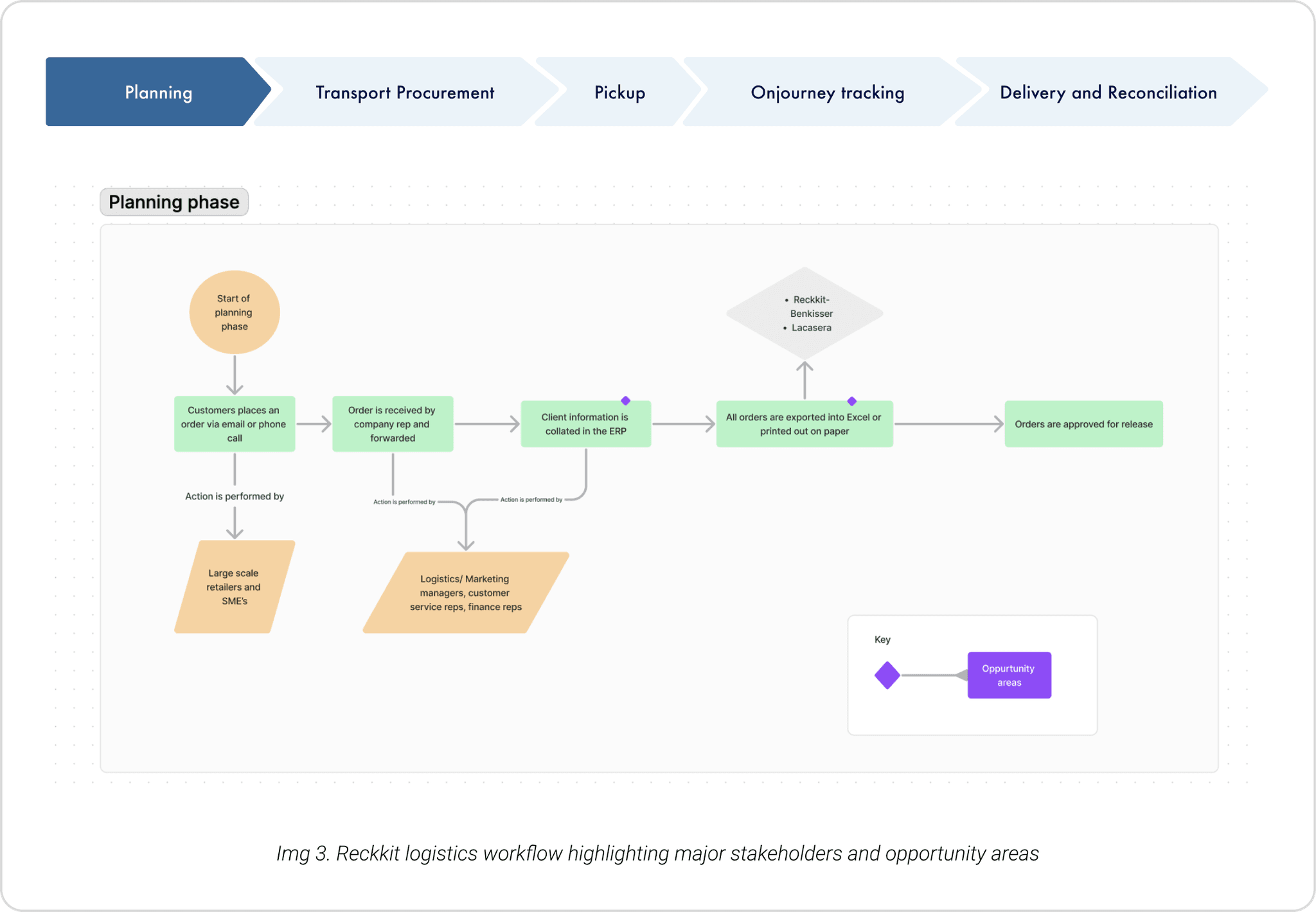
Major Insights
4 out of 5 clients were conducting high volume cargo hauls on a day to day basis, most of which was happening without Faru.
User expressed frustration around uploading order data
Managers were more inclined to reach transporters directly
Reps were not aware of all the features within the app.
Major Insights
4 out of 5 clients were conducting high volume cargo hauls on a day to day basis, most of which was happening without Faru.
About 60% of customers deliveries were performing multi cargo drop-off deliveries
70% of clients depended heavily on integrated ERP system for most of their resource management and planning
30% of reps still depend on Excel or email for data entry and transfer of information between manufacturing and haulage teams.
Major Insights
Collaborating with our head of product and sales. I conducted user interviews and 2 field studies.
Rethinking our app design
At every step of the process I was tying my inisights to evaluative concepts on tthe app
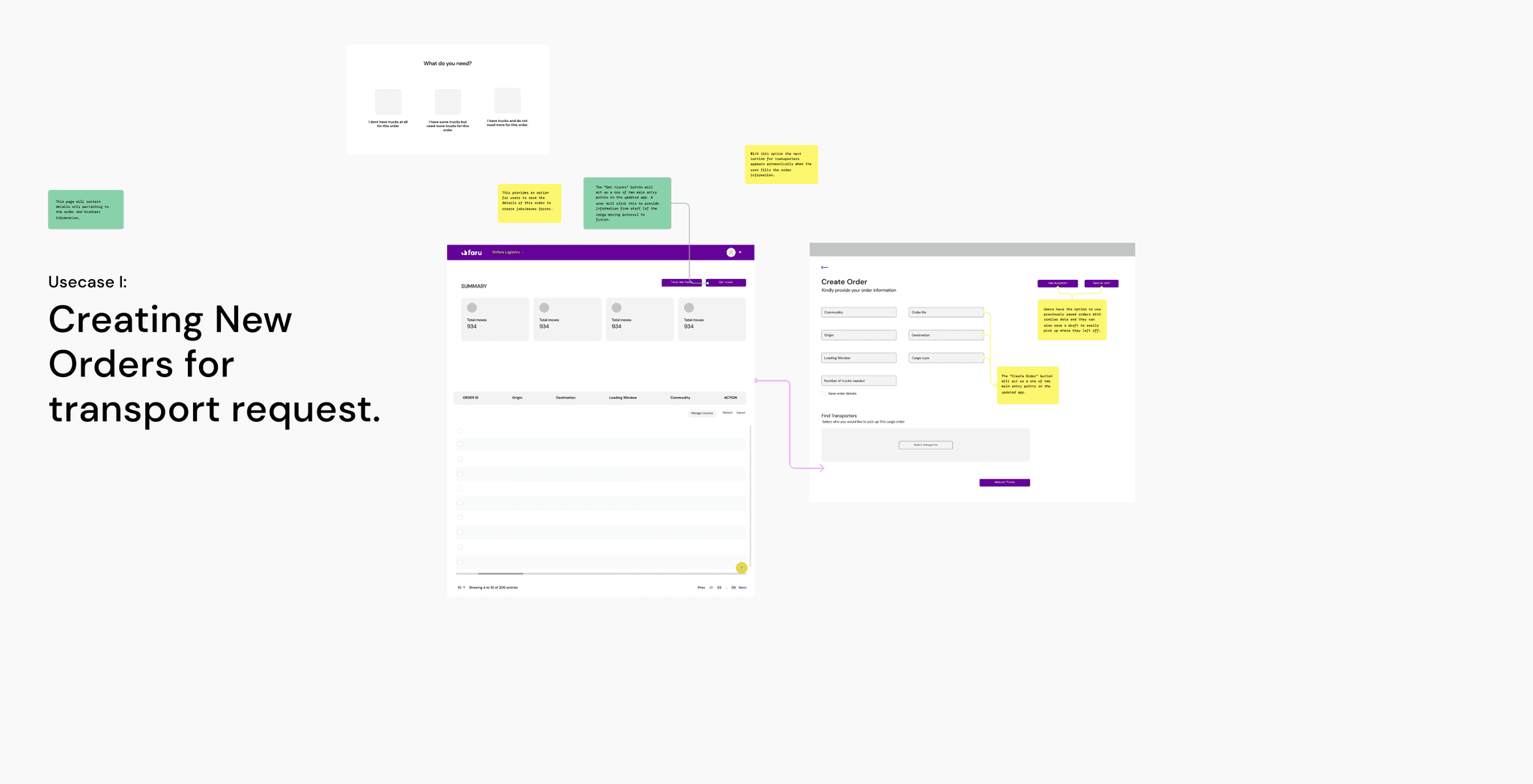
Rethinking our app design
At every step of the process I was tying my inisights to evaluative concepts on tthe app
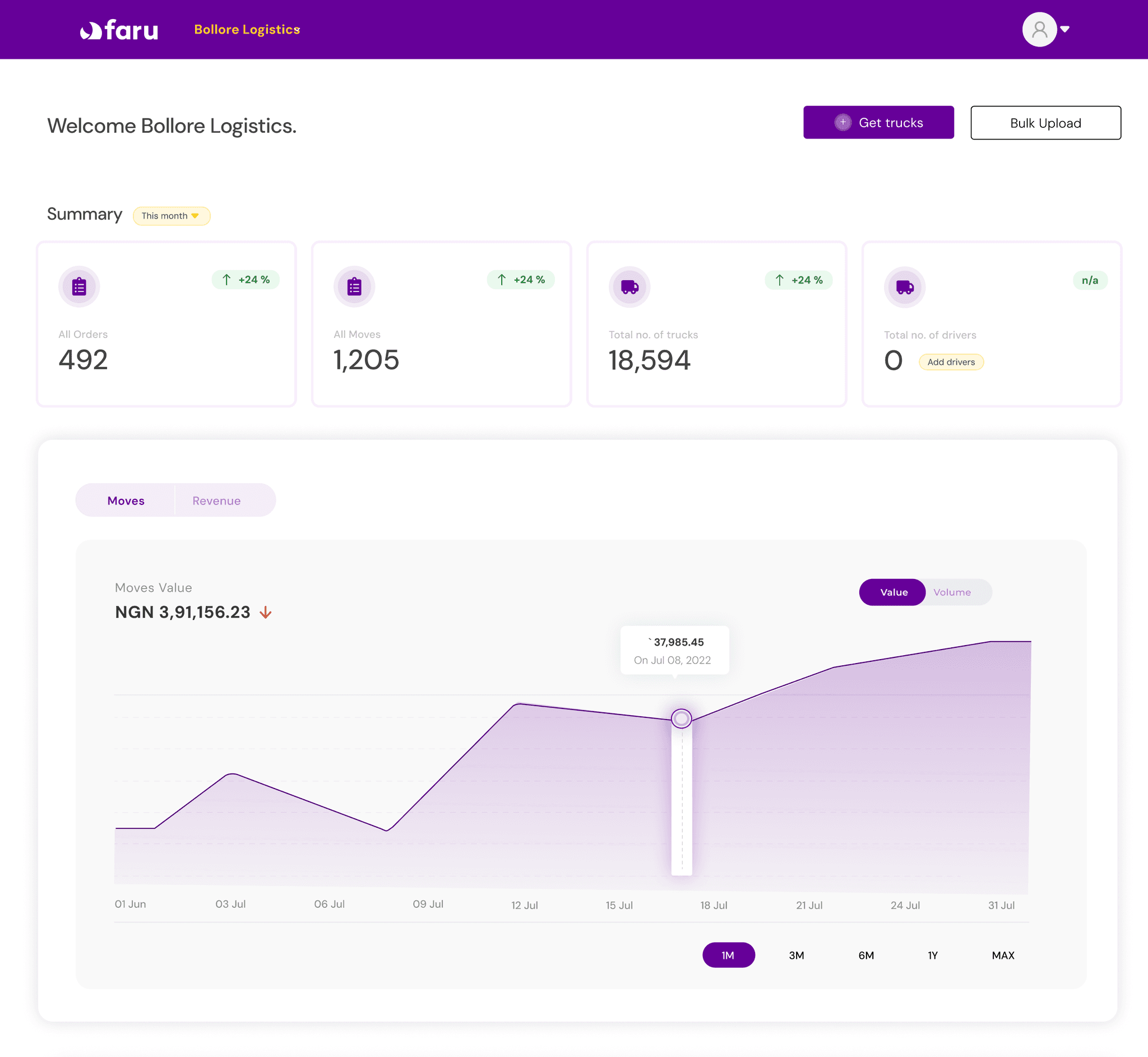
Delivering something new
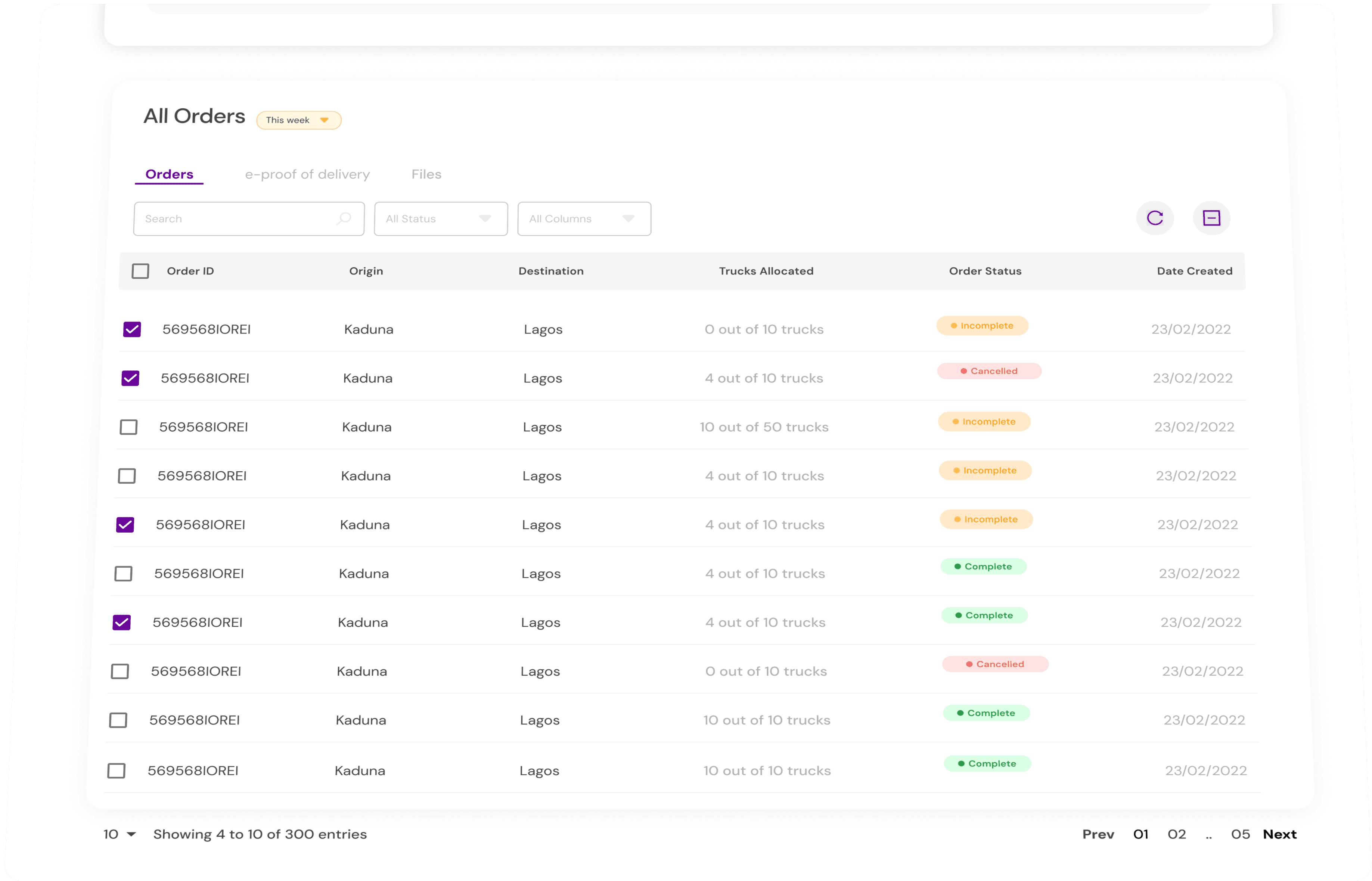
The new app focuses on restructuring the way clients created orders on the app while elevating the design.
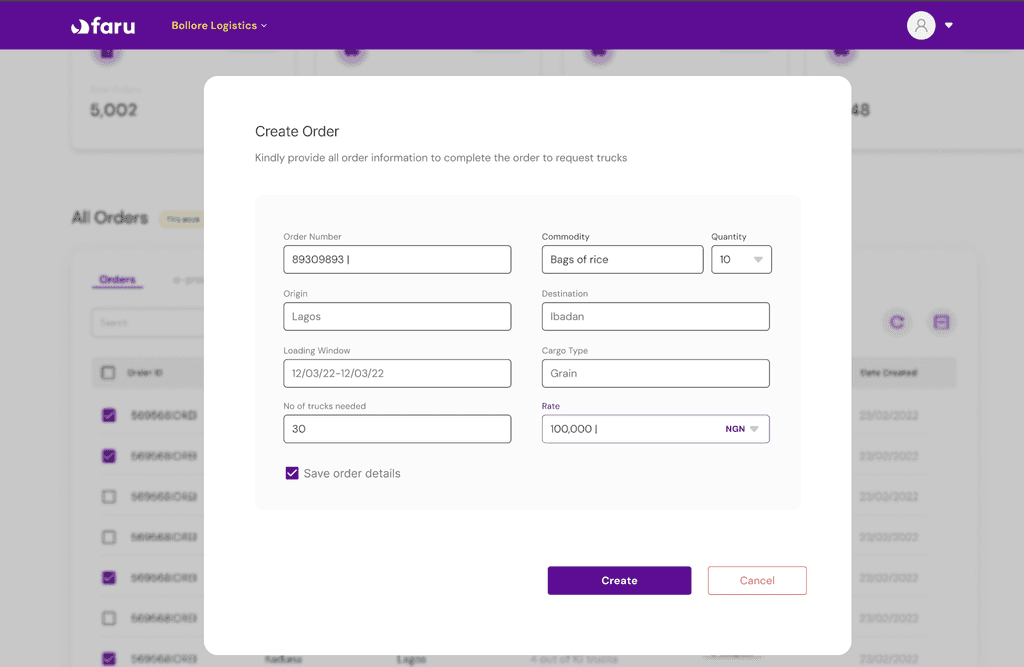
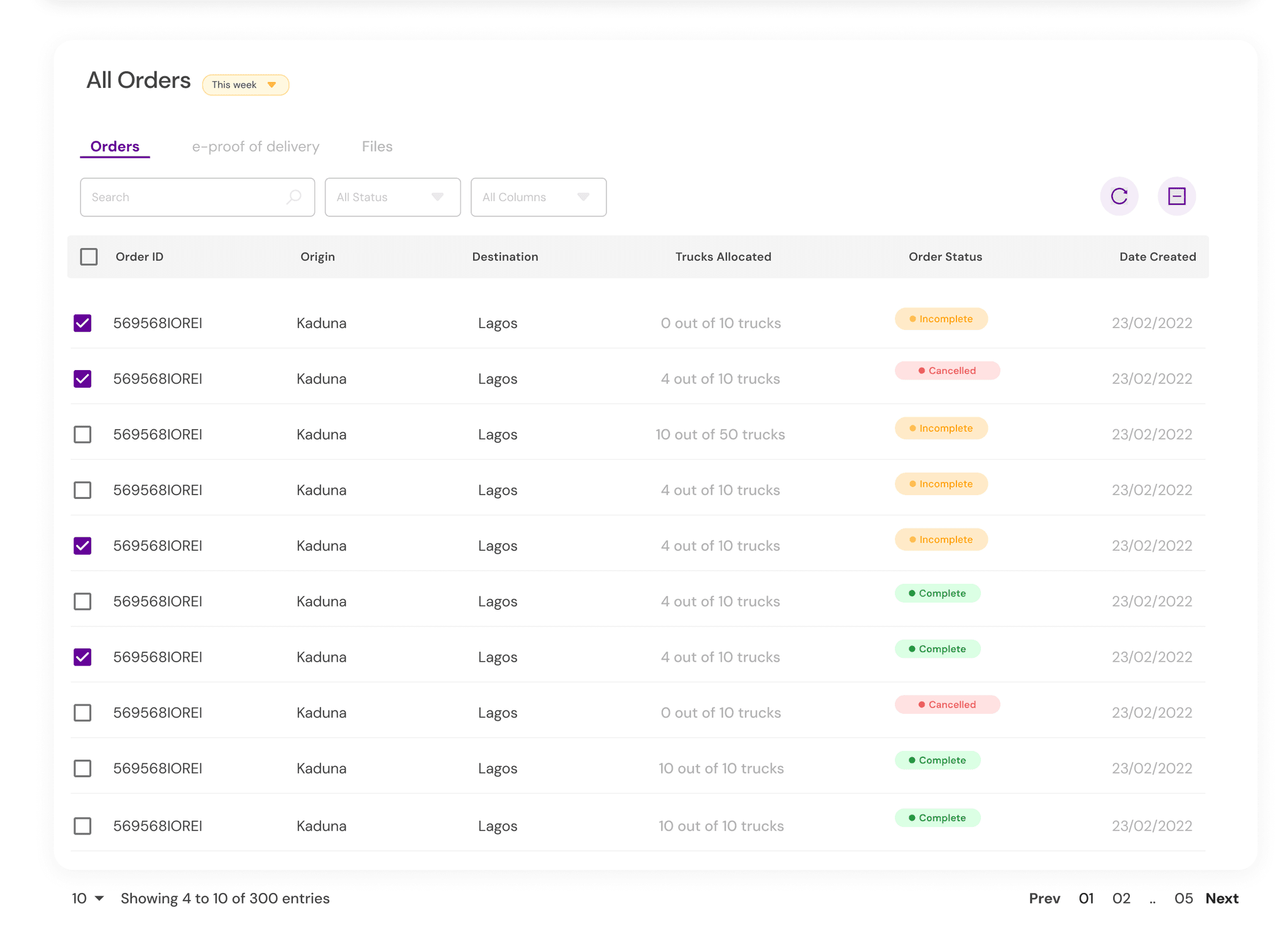
An improved one-stop view of assets, clearer status description
Derisking the new flow
During the moderated usability tests I discovered that transport reps did not immediately understand action points, copy was also a bit ambigous